

Honey Tasting Gift Set
Honey Tasting Gift Set
Couldn't load pickup availability
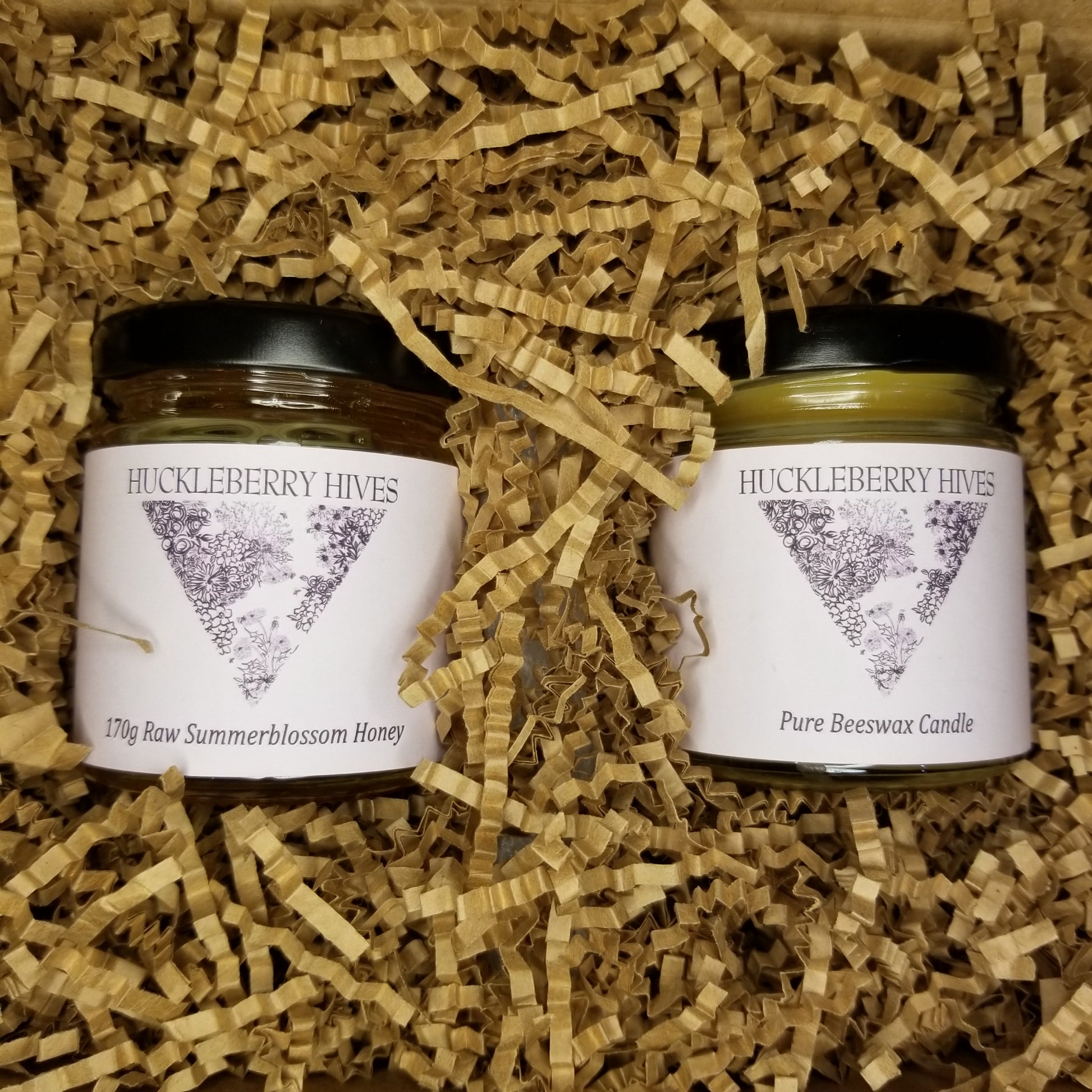
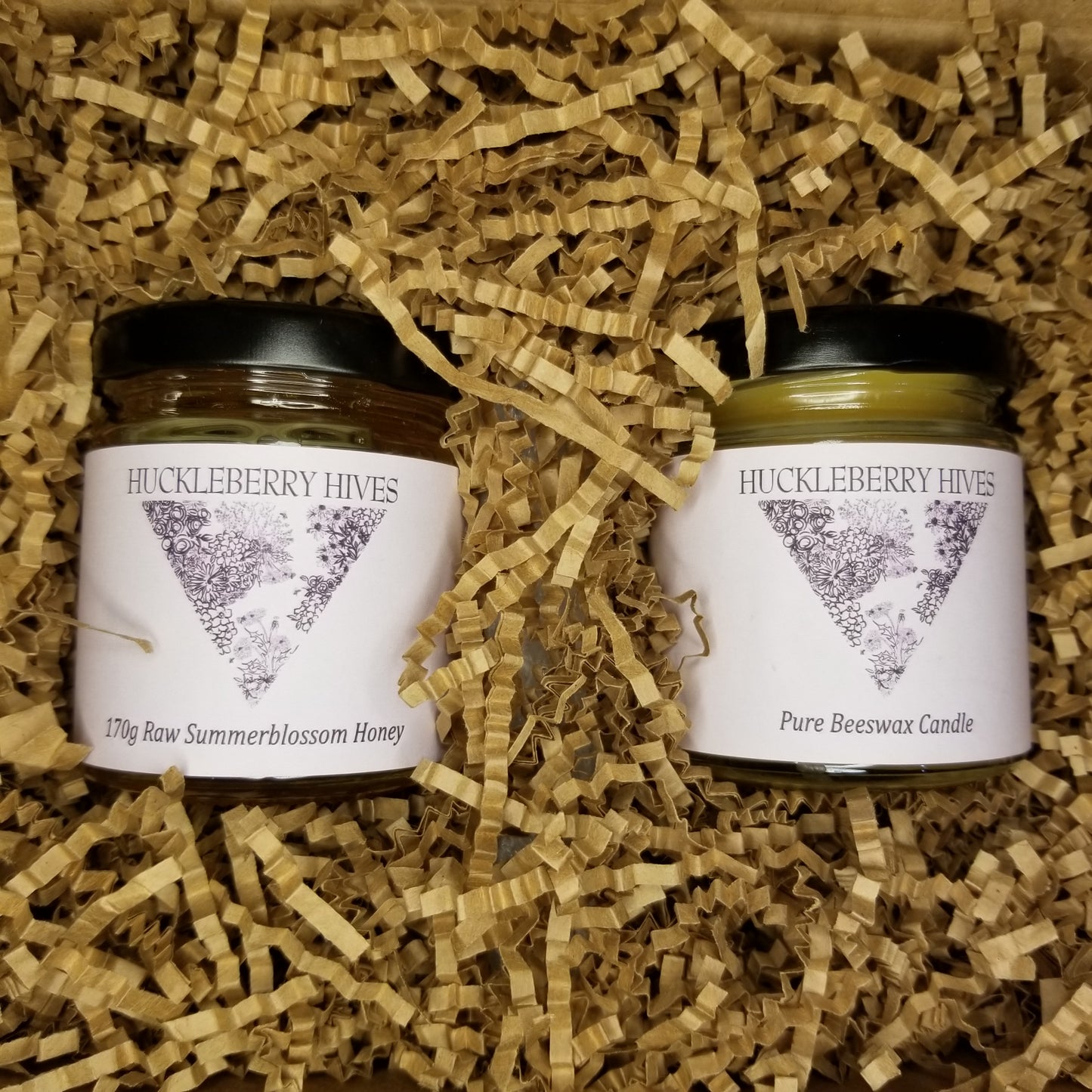
Bring some sweetness and the cozy glow of a beeswax candle into a loved one's life with this gift set, or use it to host your very own honey tasting for your friends!
- 170g jar of raw basswood honey
- 170g jar of raw summer blossom honey
- tasting guide with suggested food pairings included
- pure beeswax historic bee skep candle and info card
The tasting guide included will offer a description of each honey along with food pairings that can be used to create a wonderful charcuterie board to eat alongside the honeys, after you have sampled each one on its own, of course!
A small card separate from the tasting guide will explain the significance of the bee skep to historic beekeeping, as well as fun beeswax facts and beeswax candle burning information.
There are only 12 of these from the 2025 honey harvest, and then I'll have to see what 2026 harvest brings in for flavours in order to offer additional tasting sets!
*More photos coming soon!*

All About Honey
How I Harvest my Honey
I harvest honey with care each season when the bees have enough extra to share!
- I harvest my honey with a no-heat process. It is cold extracted and then I bottle it up before it has a chance to crystallize.
- When freshly harvested (usually late July or August) this honey is in its liquid state and will slowly crystallize over time.
- Depending on the time of year ordered, it may come to you crystallized (my favourite as it's easier to scoop out!), partially crystallized, or liquid. You can always return honey to it's liquid state with a hot water bath, repeating and stirring to help dissolve crystals if needed. I used to re-heat jars to keep them liquid, but I'd rather sell pure raw honey and will only be doing it upon request.
- Natural crystallization is sometimes fine-grained and can be quite similar to creamed honey, but without the manual labour (or machine) that is typically used to create creamed honey.
- Each season the local terroir influences the flavours captured in my jars of liquid gold, although often there are similar flowers and farmers' crops. These include alfalfa, clovers, sunflowers, wildflowers and more that the bees visit every year.
See the Honey Crystallization & Floral Sources sections below if you'd like to learn more about those topics!
Honey Crystallization
Why does honey crystallize?
Honey is made by the bees, who collect nectar from flowers. The nectar is naturally about 80% water and sugars, most of which are sucrose. The bees use their own special enzymes to break down the sucrose into fructose and glucose - the same types of sugars found in apples and other fruits and vegetables. This helps make honey a naturally healthy sweetener because our bodies recognize it quickly and both fructose and glucose are smaller sized molecules of sugar which our bodies can digest easily.
But where does the crystallization come in?
Right here: Glucose naturally prefers to form a crystalline structure, so over time it separates and builds itself into crystals within your jar of honey!
There is nothing wrong with honey that has gotten crystallized and it is perfectly safe to eat. I personally enjoy it best in this format because it is easier to scoop and dissolves into my tea or coffee just as well. However, if you prefer it liquid, you can gently heat your honey to cause the glucose' crystalline structure to dissolve back into a liquid state. Over-heating honey can destroy healthy enzymes, so it is recommended to heat no hotter than your hand can stand. My go-to method is to boil water in a kettle or saucepan, remove from heat, and place my jar into it. Allow to cool, stir and repeat if your jar is quite crystallized.
Floral Sources
The local terroir influences what grows well in a given area, when it blooms, and it can cause variations in flavours due to changes in water and heat from season to season. Thus, the nectar sources, aka flowers, visited by the bees can influence the flavour of the honey, causing it to be floral, have notes of caramel, waxiness, buttery-ness, metallic, minty or even molasses-like (think of Buckwheat honey) flavours and scents.
The flavours I tend to get most often are light floral and rich caramel flavours from wildflowers and summer blooms, which is ultimately a multifloral honey that I cannot attribute to one specific floral source.
Due to the location of one of my bee-yards, I also sometimes get a small crop of Basswood honey, which is the American equivalent of Linden honey. It has a light colour and unique flavour with metallic (or minty) and buttery/waxy notes. It's one of my favourite honey varietals!
Here in Southern Ontario, it is typical to see multi-floral, summer-blossom or wildflower listed as the floral source on most honey jars. Specific floral sources are only used when a beekeeper can clearly attribute a certain source.
Similar to wine, honeys can be different from year to year as well as regionally, depending how the weather patterns influenced the growing season. Terroir is the fancy term used to describe how these various environmental factors affect flavours. Because honey can be affected by terroir, it can also be a wonderful food to use for tasting events, comparing various honeys from different areas or years to see if there are noticeable flavour differences.
Honeycomb
Honeycomb is the most raw form honey can come in because it is both the wax comb structure that the bees build and the honey they store inside it!
The layer of wax is thin, so the comb structure cuts easily with a table knife and can be eaten wax and all.
When eating comb without pairing with other foods, the honey dissolves out and you'll end up swallowing it first. Then you'll be left with the wax. You can swallow the wax, chew it like gum, or spit it out if you don't like the texture. The wax can be safely eaten and acts similar to fiber/roughage in your digestive system.
If you actively want to eat the wax but struggle with the texture, try putting honeycomb onto toast or, my favourite, try pairing it with cheese and crackers!
The True Value of Honey
A worker bee moves from egg, to larva, to pupa and then emerges as an adult bee. She immediately begins by working within the hive, cleaning, building wax (wax glands are most active during early life), and feeding larvae (nurse bee). Then finally, during the last few weeks of her life, she becomes a foraging bee! She takes orientation flights and then begins heading out on longer flights, visiting some 200 flowers per flight. Consider the following bee math:
- A single worker bee lives for about 45 days (during summer, winter bees are different) and brings home about 0.8g of honey in total.
- Around 4 million flowers must be visited in order to make a 1 kilogram jar of honey.
- Collectively, the hive must fly a distance of more than twice around the world and visit some two million flowers in order to bring in enough nectar to produce a single pound of honey (which is a little less than 500g).
- Approximately 1250 worker bees must contribute their life's work in order to produce 1 kilogram of honey.
Basically, if we paid bees for their labour, we wouldn't be able to afford honey!! Bees are amazing! Let us be thankful that the bees produce more than they need, and that humans are able to keep bees and harvest their bounty.